 |
 |

|
 Other Electrics & Unusual Vehicles ////
Our Future? \\\\
Other Electrics & Unusual Vehicles ////
Our Future? \\\\ |
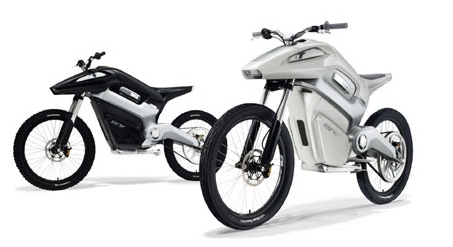 |
ENV is lightweight, streamlined and aerodynamic. It boasts a performance that outreaches any existing electrical bike. In an urban or off-road environment, it can reach speeds of 50 mph. It is also virtually silent (with noise equivalent to an everyday home computer) and its emissions are almost completely clean. On a full tank, the ENV bike could be used continually for up to four hours without any need for re-fuelling. The bike can also be used by riders of any skill level with simple controls, via a throttle directly linked to the applied power. The bike has no gears and is strictly defined as a motorbike, although it feels to riders more like a very quick and responsive mountain bike, commented director Nick Talbot. ENV has been produced in two monochromatic colourways: black supergloss and iridescent white. The bike's primary frame and swinging arm are made from hollow-cast aircraft grade aluminium. At its heart is a fully-integrated 1kW fuel cell generator providing power on demand directly to the drive-train. To enhance performance during peak power demand (ie when accelerating), the fuel cell is hybridised with a battery pack to provide a 6kW peak load to the motor. The result is a balanced hybrid concept which combines the main advantages of Intelligent Energy’s Core fuel cell, hydrogen storage and battery technology. |
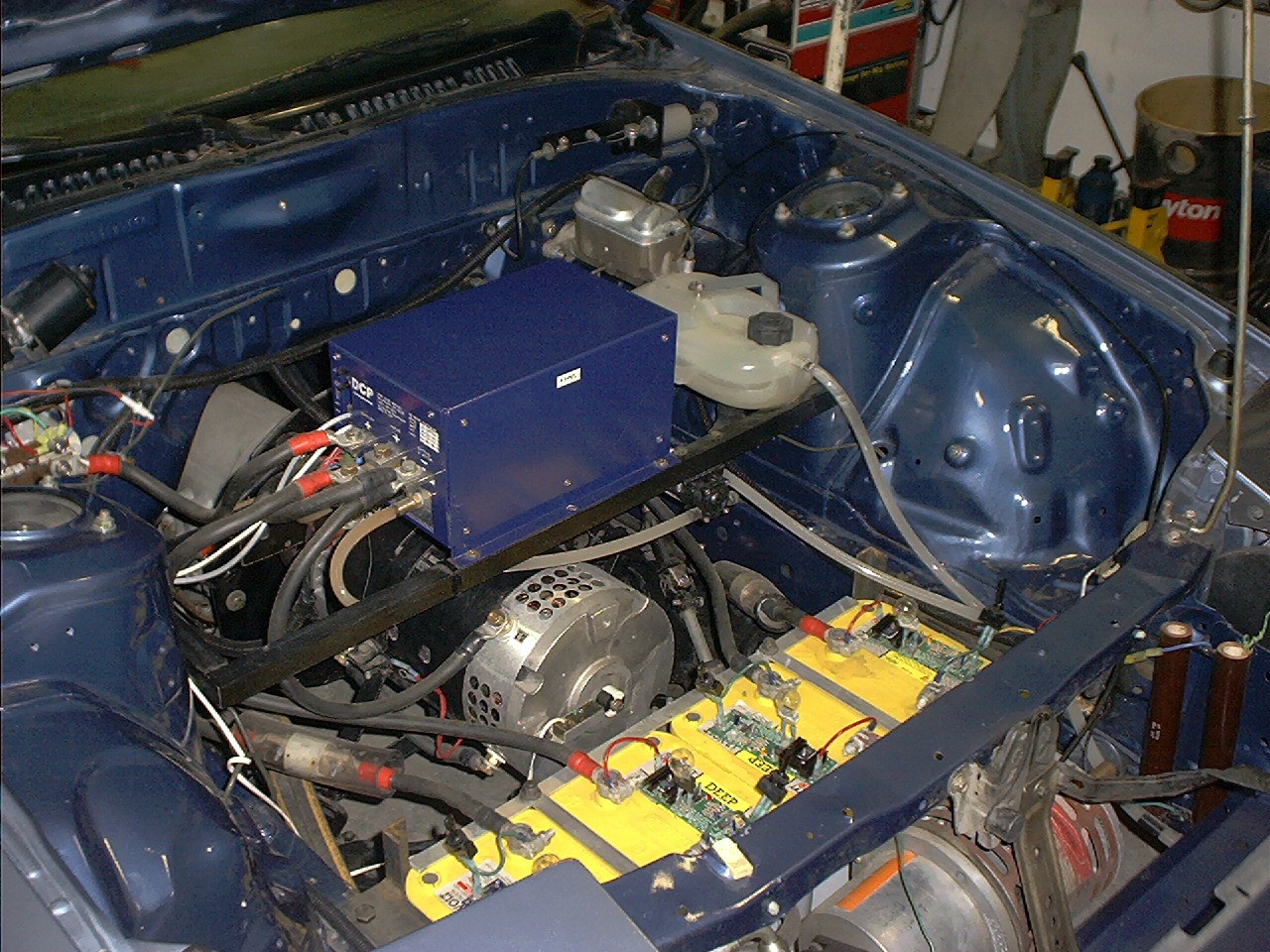 |
1986 Mazda RX-7 Rotary Electric Car: Top Speed: 60 MPH (96 KPH) Range: 25 Miles (40 Kilometers) Advanced DC FB1-4001 Series Wound DC9 Drivetrain: Chrysler 904 Automatic Controller: DC Power Systems T-1000 T-Rex water cooled Batteries: 16 Optima 750 DS, 12 Volt, Lead-Acid, AGM, Volts: 192 Volts Charger: Variac with Rudman Regulators Seating Capacity: 2 adults, Tires: 195/60R15 |
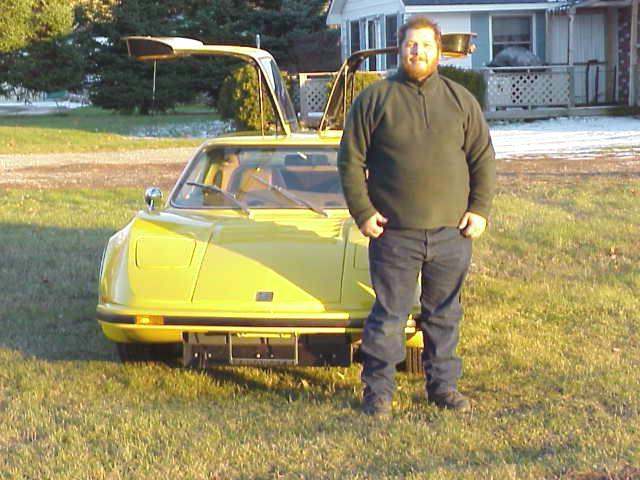 |
Electric Bradley GTE Gullwing Top Speed: 65 MPH (104 KPH) Range: 45 Miles (72 Kilometers) Motor: Warfield WarP9 Impulse Series Wound DC 9" double shaft (28 hp) Drivetrain: Stock 1970 Volkswagen Beetle Controller: Curtis 1231C-8106, Batteries: 15 Trojan T-875, 8 Volt, Lead-Acid, Flooded, 120 Volts Thermoil additive used to prevent sulfating and corrosion on terminals Charger Solar Car Corp. 240 VAC (off-board), Russco SC 18-120 SO 120 VAC (on-board) DC/DC Converter: Meanwell 120 Volt to 12 Volt Seating Capacity: 2 adults Curb Weight: 2,420 Pounds (1,100 Kilograms), Tires: Goodyear P205 75R 14 Features: Two rear air dam intake blowers to keep the controller and motor cooler and with good air flow |
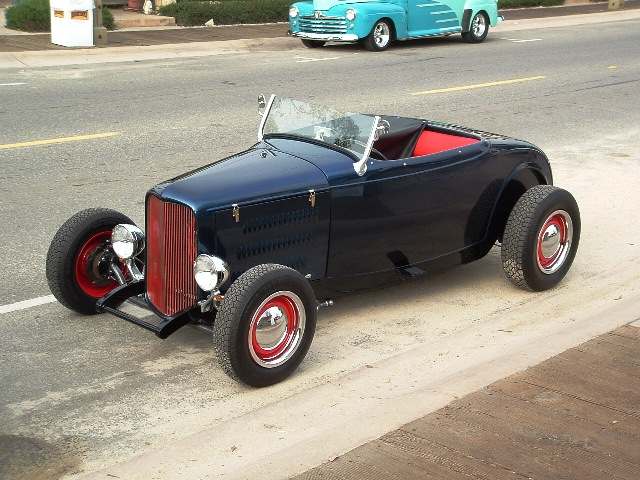 |
1932 Replicar 3/4 size Hiboy Roadster Hot Rod: www.eroadsters.info Top Speed: 50 MPH (80 KPH), Range: 45 Miles (72 K) Motor: Advanced DC 203-06-4001, Controller: Curtis 400 Amp Drivetrain: Direct Drive via Drive Shaft to Automotive Differential Batteries: 12 Trojan T-875, 8 Volt, Flooded Lead-Acid, 96 Volts Charger: K and W 120 VAC transformerless, on-board DC/DC Converter: Curtis 96 Volt to 12 Volt Curb Weight: 2,000 Pounds (909 Kilos), Tires: Front: 155 R13 78S / Rear: 207 R14 95S Conversion Time: Prototype construction time 9 months |
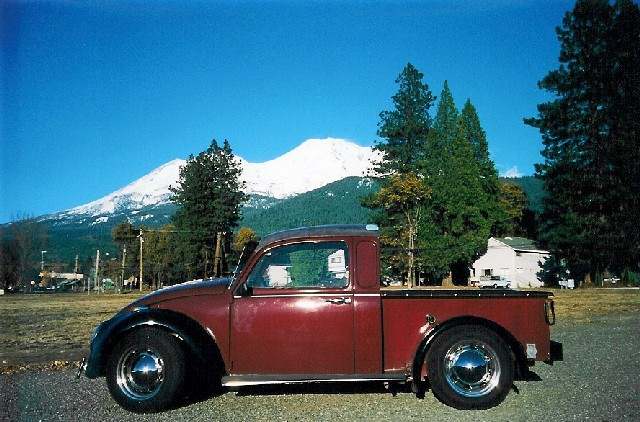 |
VW Bug Style Truck Top Speed: 70 MPH (112 KPH), Range: 30 Miles (48 K) mountain freeways at 65 MPH Motor: Advanced DC FB1-4001A, Controller: Curtis, 4 speed transmission Batteries: 18 US Battery 8VGC, 8 Volt, Flooded Lead-Acid, 144 Volts Charger: Manzanita Micro PFC20, DC/DC Converter DC Power Systems Seating Capacity: 2 adults inside, 2 in the bed facing rear on battery box Curb Weight: 3,000 Pounds (1,363 Kilograms), Tires: Goodyear 165R15 Convert Time: 18 months, Convert Cost: $8K with better brakes and suspension Features: Ducting system battery boxes are vented outside while charging |
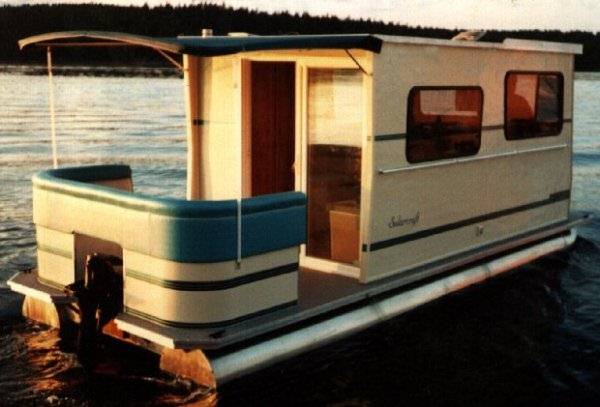 |
22' Pontoon House Boat: http://www.canev.com/ Top Speed: 6 MPH ( 9 KPH) (5 Knots), Sleeps 5 adults Motor: CEV 8 HP peak, outboard motor, Controller: Curtis 1204 Batteries: 6 Trojan, 6 Volt, Lead-Acid, Flooded, 36 Volts Charger: Lester (Onboard), Solerex 80 Watt solar panels, DC/DC Converter included Additional Features: Pressure water system, 2 burner alchohol stove, 30 AMP twistlock charging port, 50' #10 charging cord, Ice box, Toilet with holding tank, Wheelchair Accessible, Morse "tilt wheel" steering, Morse throttle/shift control, Bimini top, Tandem axle trailer with hydraulic surge brakes |
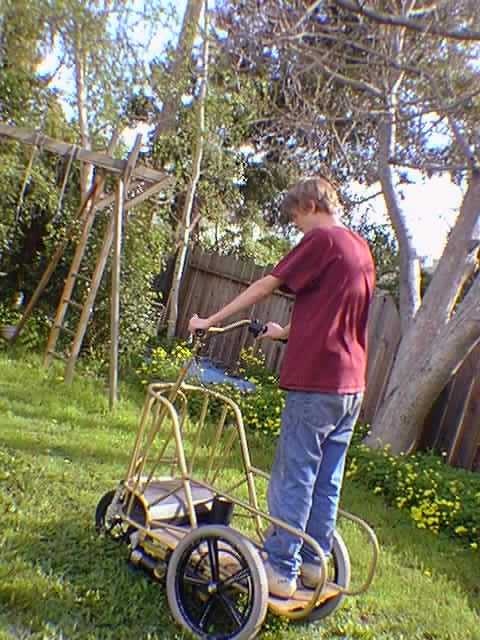 |
Chariot: www.gobblestudios.com/ev/ Top Speed: 20 MPH (32 KPH) depending on motor installed Range: 20 Miles (32 Kilometers) 24 Volt wheel chair motor Drivetrain: Belt, Controller: Curtis 1505, Batteries: 4, 12 Volt, 17 Ah, 24 Volts, Charger: 6 Amp Seating Capacity: 1-2 adults Curb Weight: 120 Pounds (54 Kilograms), Tires: Full Rubber Conversion Time about 4 months |
|
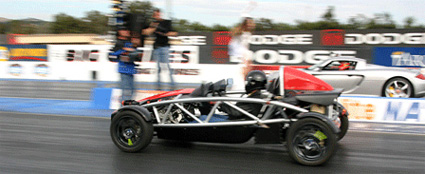
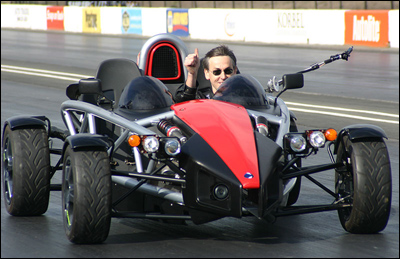
The X1 Prototype: http://wrightspeed.com/x1.html The X1 prototype is a concept car, and a test platform. It is not a production car, and never will be. It’s a proof-of-concept vehicle that will lead to a production car in the future. To build it as a prototype, we looked for the best of the best, in today’s technology. We chose the AC Propulsion (www.acpropulsion.com) 3-phase AC induction motor and inverter – the highest power/weight ratio system available; brilliantly engineered, and with about a decade of durability testing to date. For the chassis, we turned to Ariel, in Somerset. (www.arielmotor.co.uk). Simon Saunders, the designer of the Atom and the founder and CEO of Ariel, has created in our view one of the world’s most beautiful cars, as well as the quickest, lightest chassis on the road. To drive it is a revelation. Simon’s background is in automotive design, notably for Aston Martin and Porsche. The Atom chassis was substantially modified for the electric drive train, but retains the original styling. The X1 prototype is just the beginning. It meets its design specs of 0-60 in 3 seconds, 170 mpg equivalent; and at 1536 lbs, is only 36 lbs over the design target of 1500. It really does raise the performance driving experience to a new level, even for racing drivers. No clutch, no shifting, precise and immediate control of torque in drive and braking, perfect traction control…first gear takes you to 112mph… |

|
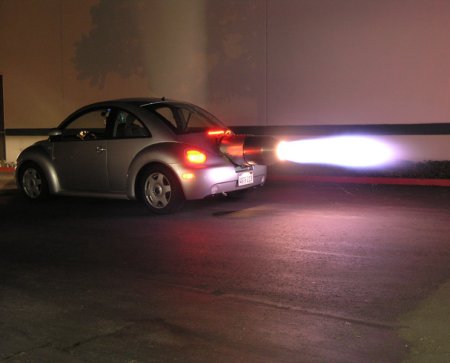
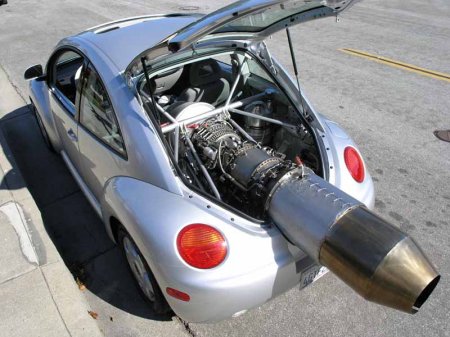
Ron Patrick's Street-Legal Jet Powered VW Beetle, ron.patrick@ecm-co.com A VW Beetle with a normal VW motor and a GE T58-8F helicopter turboshaft engine converted to run as a jet, to get through rush-hour traffic. The production gasoline engine in the front drives the front wheels and the jet engine blows out the back. The idea is that you drive around legally on the gasoline engine and when you want to have some fun, you get on the burner. You can start the jet while driving along on the gasoline engine. I learned while getting my fancy degree in Mechanical Engineering from Stanford University. The car is licensed in California. In California, new cars have bi-annual smog inspections so if you modify the engine, it is likely to fail the inspection and you won't be able to drive it on the street. There are some exempt engine modifications (ex. after-cat mufflers - big deal) but none that will allow you to add 1350 hp to a new car. Car was built to look as if VW delivered it this way. It handles fine and is safe. It has been in hot rod shows (San Francisco Custom Car Show, Grand National Show in Pomona, and the Detroit Autorama). Air for the jet enters the car through the two side windows and the sunroof. It's a little windy inside but not unbearable. The production hatch release switch on the driver's door activates two new latches (one on each side) and the hatch pops open just like a production car. The "hatch not closed" warning light works too. The heat blanket keeps the plastic bumper from melting when the jet is operating. The back of the gauge panel was kept open to give the car a techie look. There are three gauges for the jet: %RPM, Oil Pressure, and Turbine Inlet Temperature. The most important is turbine inlet temperature. If you exceed about 650 degrees C for very long, you damage the engine. This is critical on start-up. You don't want a "hot-start". The throttle for the jet engine is located next to the gear selector. It is a lever and has three buttons: Cool, Big-Fire, and Afterburner. "Cool" leans out the engine and is used to lower the turbine inlet temperature if you get a hot-start. To light big-fire or the afterburner, you hold a button down and 1/2 second later, press the hot-streak button on the floor. Then things happen! The force from the jet is tied to the vehicle through sandwich plates inside the car bolted to contoured aluminum billets that were slid into the frame rails. Kerosene is stored in a custom 14 gallon, baffled, foam-filled kevlar fuel cell in the spare tire well. Two fuel exits in the back: a -12 on the left side and a -10 on the right. The -10 goes to a shutoff, then a Barry Grant pump (one of the few hot rod parts on the car), then up into the car where it sees a filter, a regulator, and an electrical shutoff valve before feeding the engine. The -12 goes into a shutoff, then a 1.5 hp, 11,000 rpm, 24V custom electric pump. Pump is magnesium and can maintain 100 psi at 550 gph. From the pump it goes into the car to a filter, then a large regulator, and then to the afterburner solenoid and the big-fire solenoid (to left of pump and feeding bottom of tailpipe through orange covered hose). Fuel system was tested for flow capability. Above the big pump is the relocated gasoline cap actuator and on the right side is the stock fuel evaporative control equipment. All circuits feeding solenoids and pumps have fuses, relays, kick-back diodes to minimize contact arcing, sealed connectors, and use automotive wires of a gauge giving a maximum of 1V drop over the circuit loop. The engine is a General Electric Model T58-8F. This is a helicopter turboshaft engine that was converted to a jet by some internal modifications and a custom tailpipe. The engine spins up to 26,000 RPM (idle is 13,000 RPM), draws air at 11,000 CFM, and is rated at 1350 hp. It weighs only 300 lbm. It grows as it warms up so the engine mounts have to account for this. The mounts in the front are rubber and the back are sliding mounts on rubber. The structure holding the engine was designed using finite element analysis and is redundant. Strong, damage tolerant, and light. Second battery and fuse/relay panel on the right, halon fire system and 5 gallon dry sump tank on left. 24V starter motor is in the nose of the engine. 700 A of current goes into that motor for 20 seconds during start-up. Due to heat, must limit starts to three in one hour. Big screen is to avoid FOD (foreign object damage). Jet keeps sucking the rose out of the bud vase on the dash! Rectangular tank under inlet screen is for various fuel drains. There is a temperature gauge and shutoff valve for dry sump tank. 3 gallons of turbine oil at $25/quart. A police officer tryed to figure out what to charge me with. The California Department of Motor Vehicles did not anticipate such a vehicle so he's out of luck. Since the car has two engines, that makes it a hybrid, so maybe we can drive in the commuter lanes along with the Toyota Priuses. The four rows of variable inlets/stators at the front of the engine change angles with engine speed and are used to avoid compressor stall. There are 11 compressor stages and 2 turbine stages. The engine's pressure ratio is 8.3:1 |
|
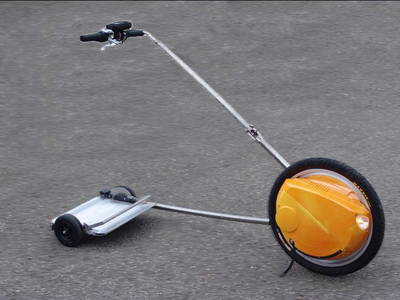
It’s a grown up Big Wheel – $1150 The Swiss made Easy Glider is powered by a 360watt motor, is eco friendly, virtually silent, and recharges on descent (we don’t know how fast or for how long). The signal wheel device is available in other colors, and can be configured without the footbridge to allow for skateboard or rollerblade use. |


|
|
Copyright © by BikeMenu.com Please eMail us at: office@BikeMenu.com with your comments! |